North Dakota source-and-organization guide
North Dakota custody trial preparation: get your dates, records, witnesses, and exhibits organized.
A hearing date is coming, and right now your case lives in scattered places — texts, emails, school records, calendars, names you need to remember. This page gives you a calm, repeatable way to pull it together, anchored to North Dakota's own official sources. One boundary up front: you won't find legal advice here — no rule summaries, no deadlines, no strategy. What you'll find is a way to organize what you already have.
1. Begin with your court's own materials
State-level self-help pages are a starting point, not a substitute for the orders, notices, scheduling materials, and local instructions in your matter. Save the title and URL of an official page, the date you accessed it, and the date or version shown on any linked document. If a question remains, record the question instead of filling the gap with an assumption.
2. Create an official-source log
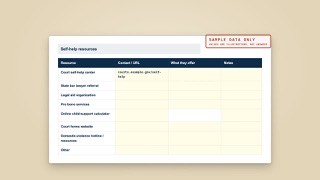
Use one row per source. Useful organization fields are: source title, court or agency, URL, date accessed, document/version date, topic label, and an unresolved-question field. Revisit the original source before you act because pages, forms, and procedures can change.
North Dakota official starting points
- North Dakota Court System: Legal Self Help Center — the judiciary's starting point for people handling a case without a lawyer.
- North Dakota Court System: general-use checklists and template forms — the statewide library of district court civil forms and checklists.
- North Dakota Court System: court locations — find the district court and courthouse for your county, with addresses and contacts.
- North Dakota Court System: other resources — the judiciary's list of legal aid organizations and the state bar lawyer-referral service.
- Legal Services of North Dakota — a statewide nonprofit offering free civil legal help to people who qualify.
- North Dakota Court System: establishing custody and visitation — the judiciary's topic page on residential responsibility and parenting time for parents.
Links are provided as starting points only. Their inclusion is not an endorsement by any court, and Steadycase is not affiliated with these courts, agencies, or organizations.
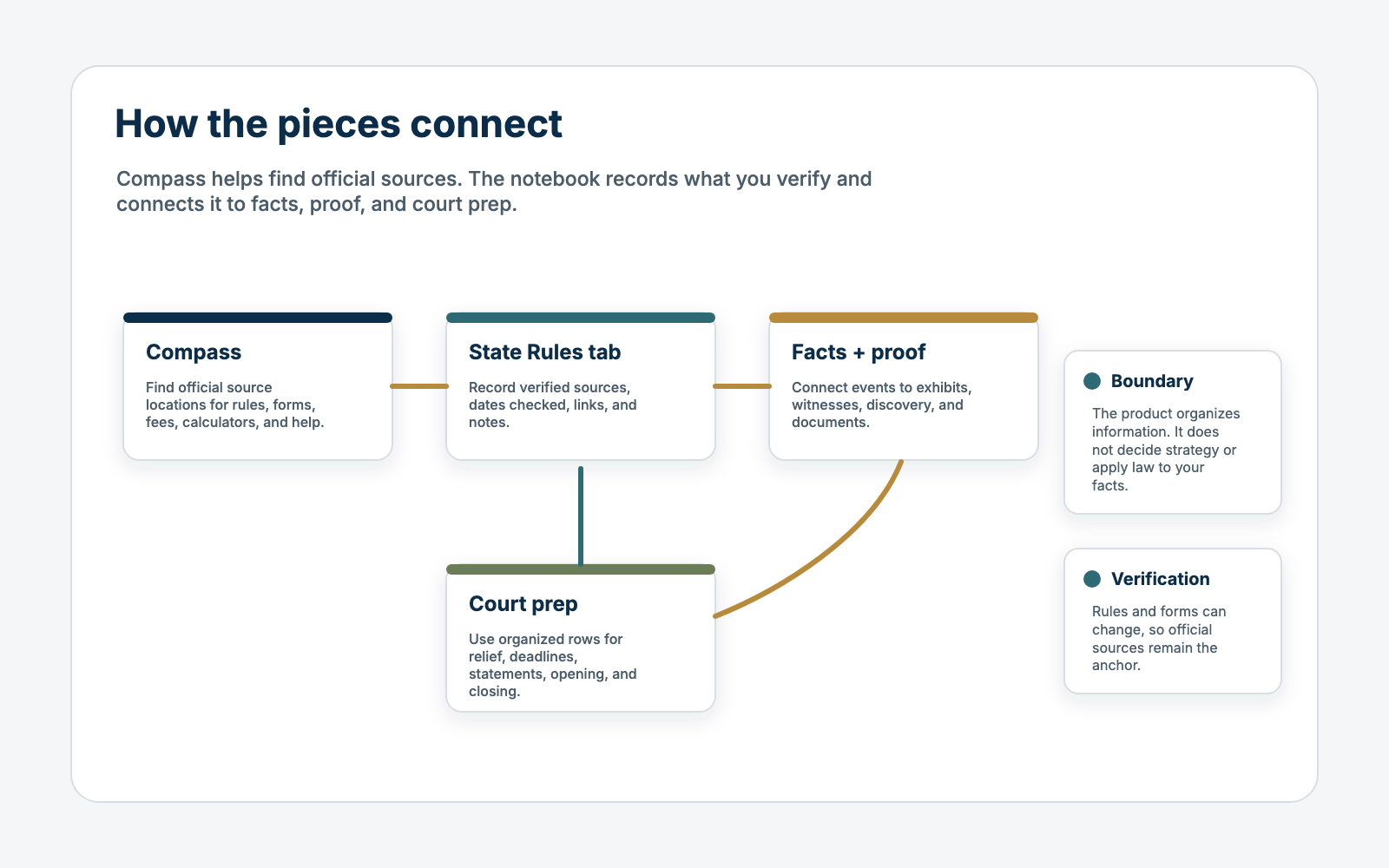
3. Connect your own materials without making legal judgments
- Index events. Enter a date or best-known date, a neutral description, and the location of the original record.
- Index people and files. Record who or what is connected to an event without deciding admissibility, relevance, or strategy.
- Use neutral topic labels. Apply consistent labels so related dates, witnesses, and documents can be found together.
- Separate user-entered dates from source checks. Copy dates from your own orders/notices exactly and verify questions through current official sources or qualified legal advice.
- Run a final location check. Confirm you can open the original item and that your index points to the right file.
4. Decide what level of system you need
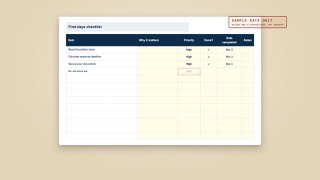
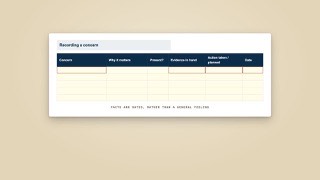
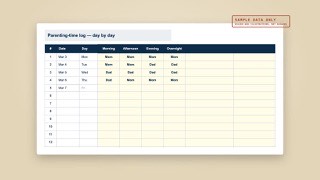
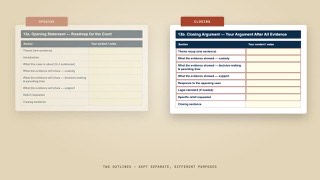
Start with the free Custody Field Guide — a short PDF that walks you through the first organizing pass: collecting what you have and labeling it so it can be found again. If you outgrow it, the Steadycase Custody Trial Notebook is the full Excel and Google Sheets system for timelines, parenting-related topics, discovery, exhibits, witnesses, requested relief, source checks, user-entered deadlines, and final preparation tasks.
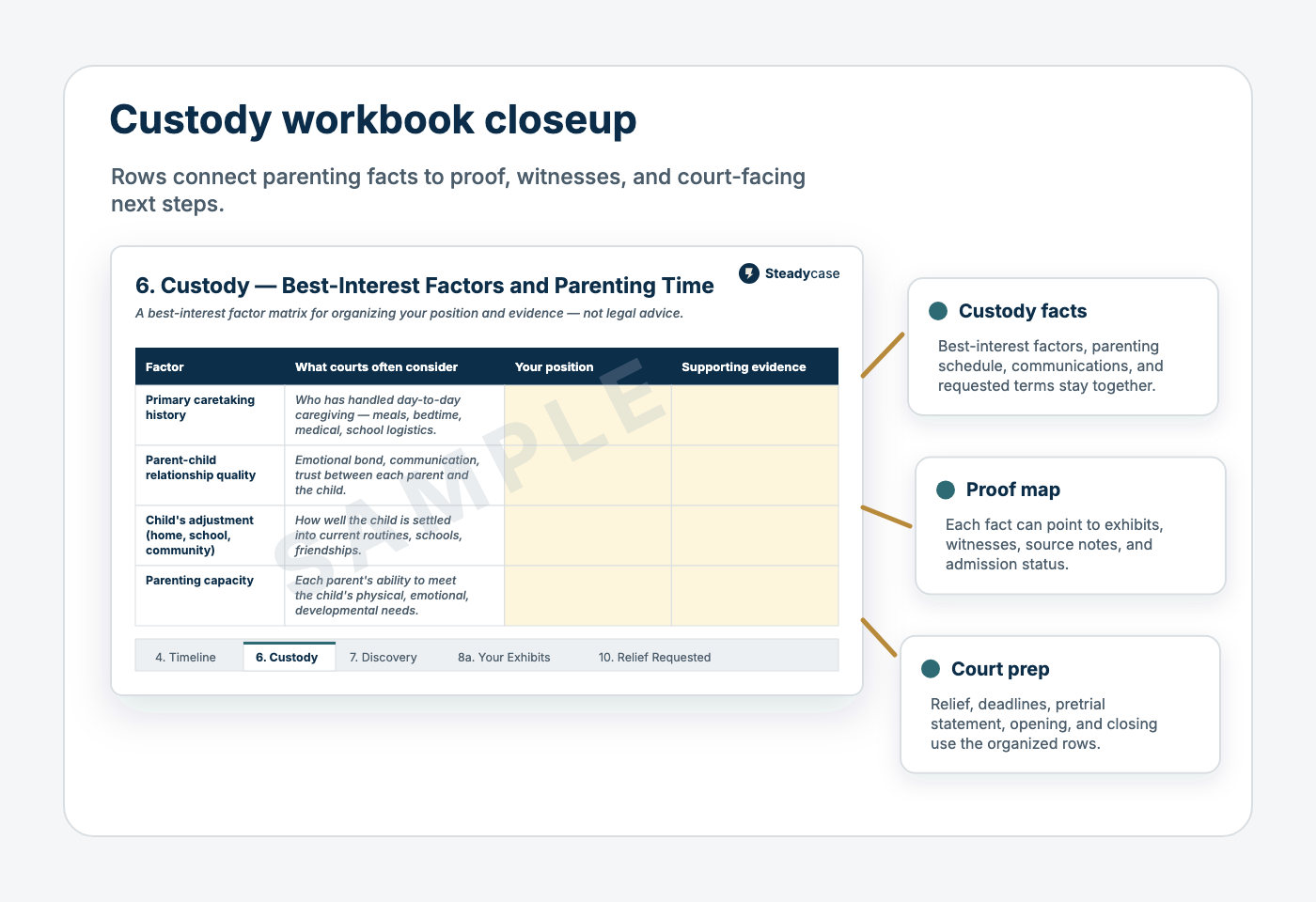
Watch the notebook, a section at a time.
If you would rather see the notebook than read about it: eight short videos, a section at a time, with captions and transcripts. Start with the overview.
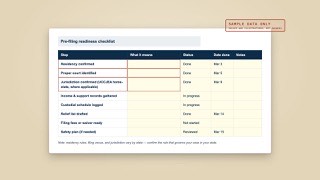

Steadycase was built by a practicing family-law attorney — a vetted organization system, not an AI guessing at your case. And it holds the same boundary as this page: it never selects arguments, calculates deadlines, determines admissibility, prepares filings, or predicts an outcome.
Legal-information boundary
Organization does not answer the legal question.
Steadycase is sold by AlbusWorks LLC, which is not a law firm. Buying or using it does not create an attorney-client relationship or include legal review, advice, representation, or access to David Martino. Use current official sources and seek advice from a qualified attorney when you need help applying law to your circumstances.