Picture a court date two weeks away. Screenshots sit in one folder and emails in another. A half-finished note is saved somewhere else, next to a photo of a paper you meant to keep. Someone asks what you might need to show at the hearing, and the pile does not answer.
Episode 2 of The Steadycase Podcast takes the next step after the Document Everything habit: a working packet. A working packet is a thin set of labeled copies for one hearing date. Organizing those copies stays separate from courtroom strategy. This page walks through the habit, one fictional example, and a few practical follow-ups.
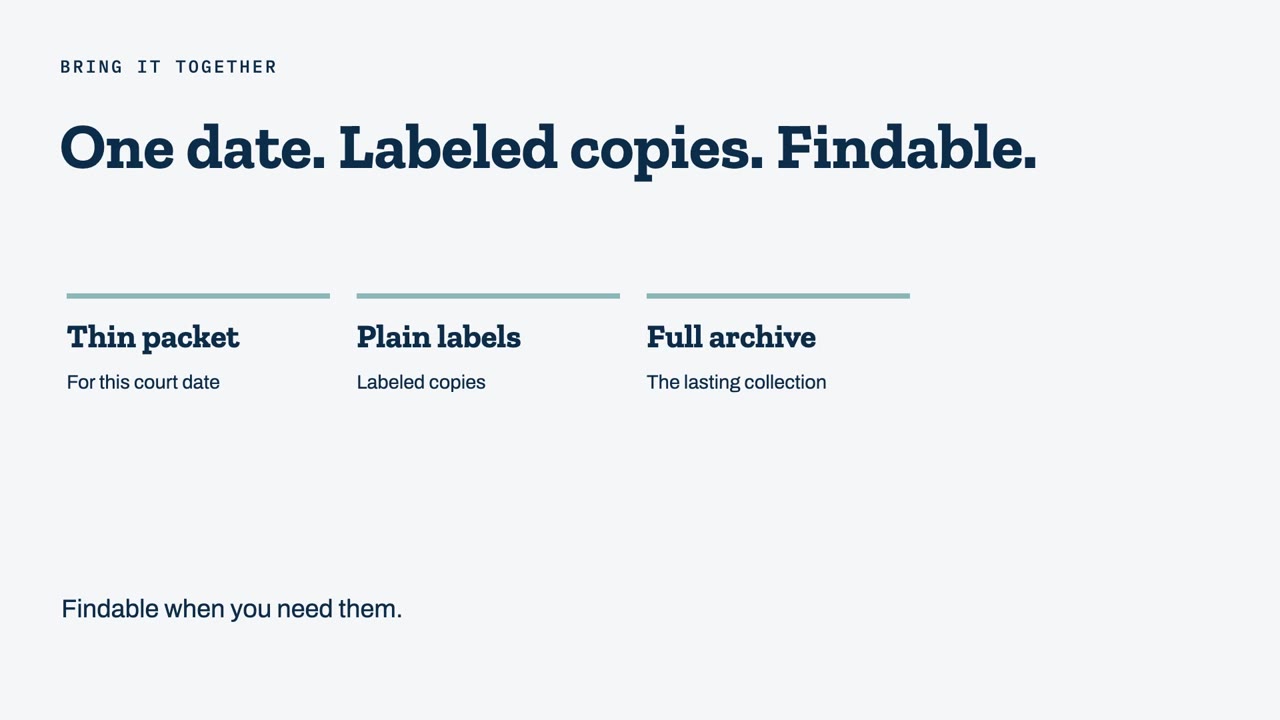
The short answer: a thin packet for one date
Treat the packet as three small habits rather than a project.
- Step 1Name the purposeOne ordinary sentence: what do you need on this court date?
- Step 2Copies, labeledPut labeled copies in the packet and keep a lasting set in your archive.
- Step 3Keep it separateThe archive stays large. The packet stays thin and changes with the purpose.
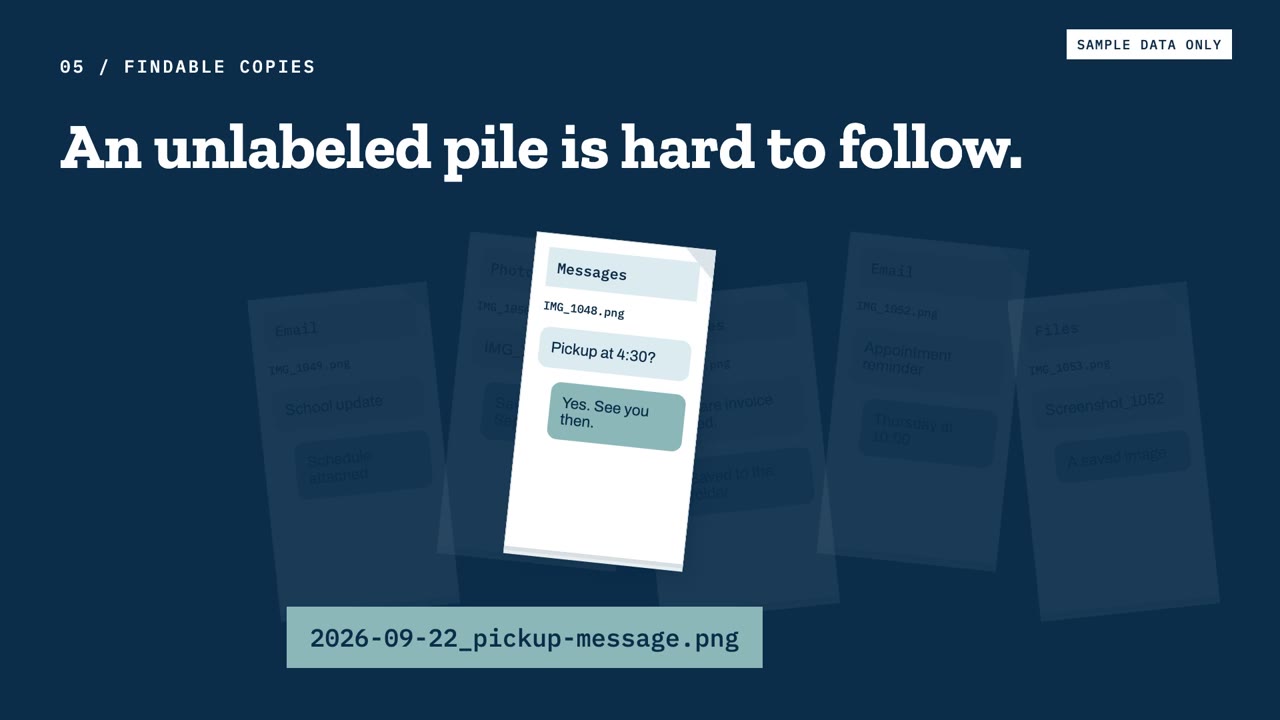
A pile of unlabeled screenshots is hard to search. Findable copies with plain labels are easier to use.

Name the purpose in one sentence
Start with one ordinary sentence about what you need on this court date. You are not writing an argument. A plain purpose keeps the packet efficient and manageable, because anything outside that purpose stays in the archive.
The packet follows that purpose. Records outside it stay organized in the archive, ready for a later date. Whether a particular record relates to the issue being heard is a separate legal question.
How to label a file so you can find it again
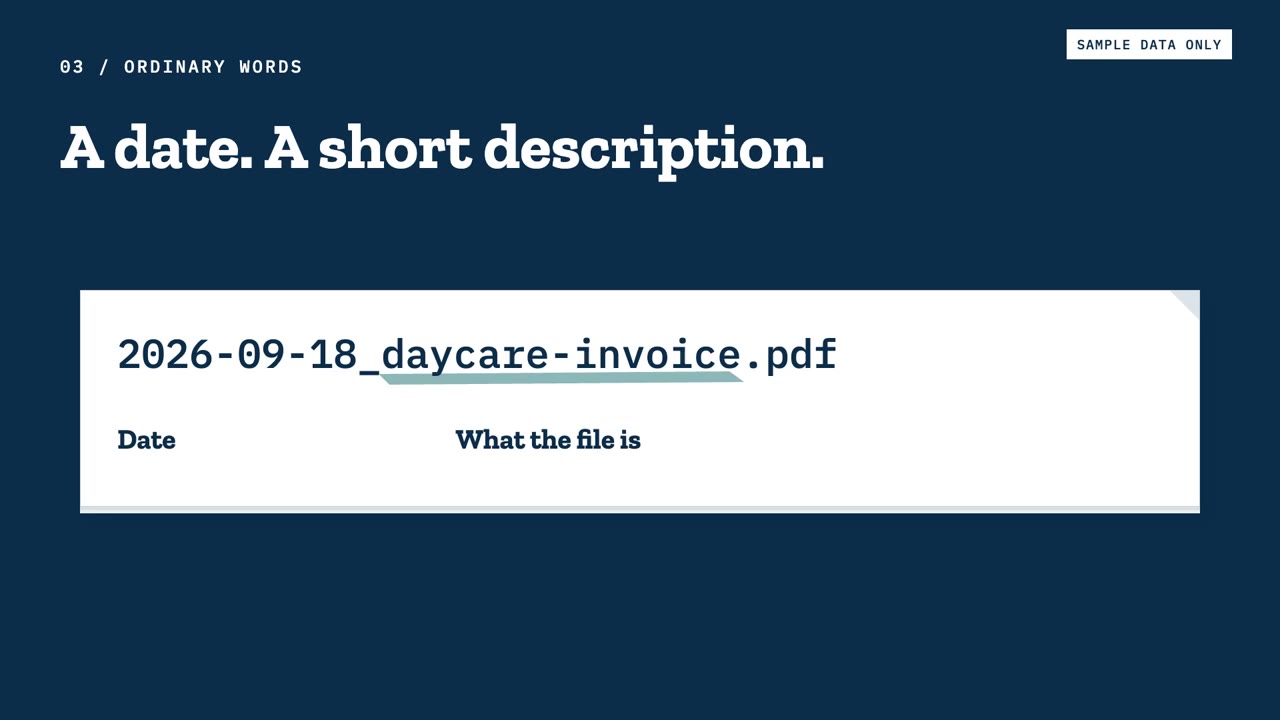
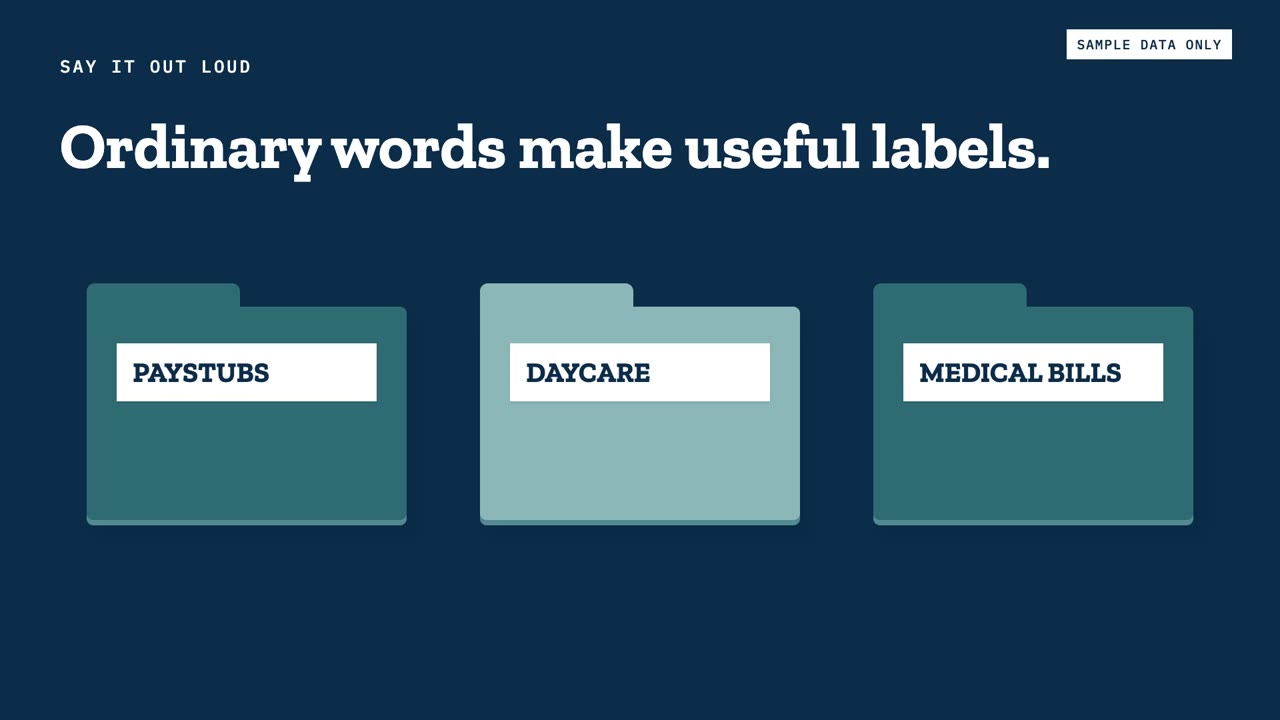
Label each section of the packet with ordinary words. A useful name often starts with the date, then adds a short description of what the file is. Use words you would be comfortable saying out loud to a judge.
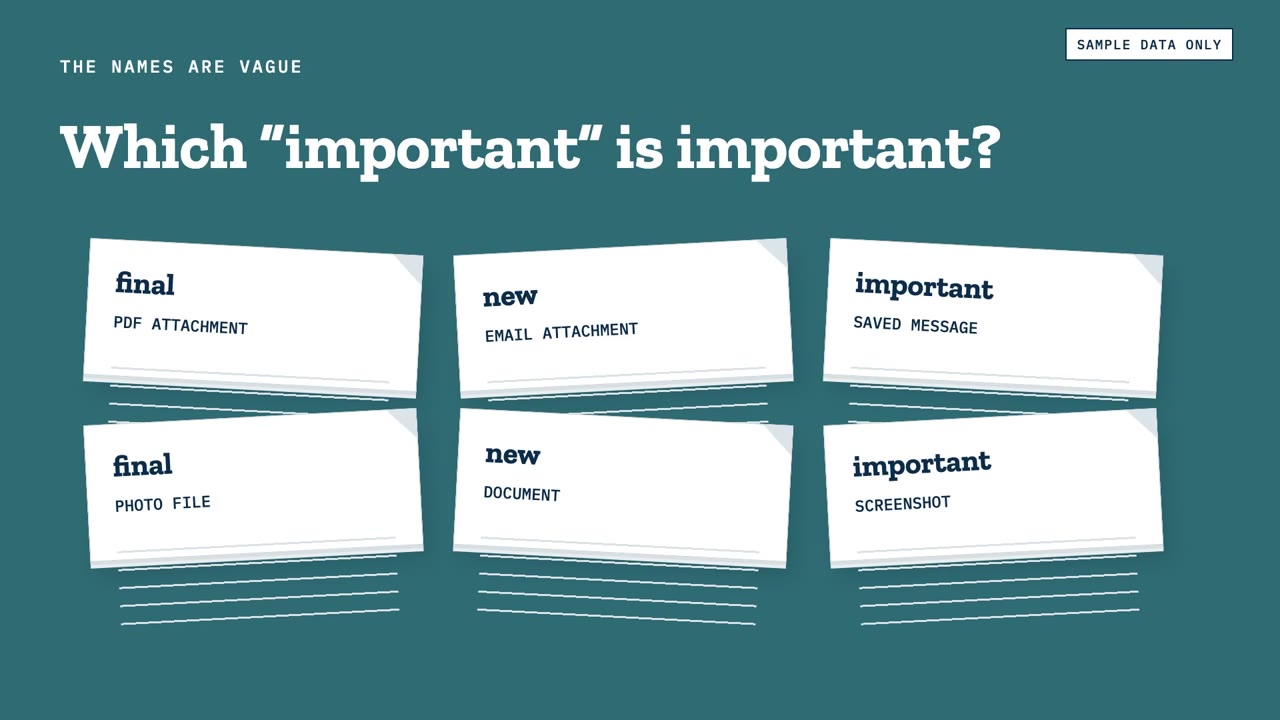
Do not invent a dramatic title that argues your case. “Final,” “new” and “important” are not labels. A date and a plain noun are.
The archive and the working packet
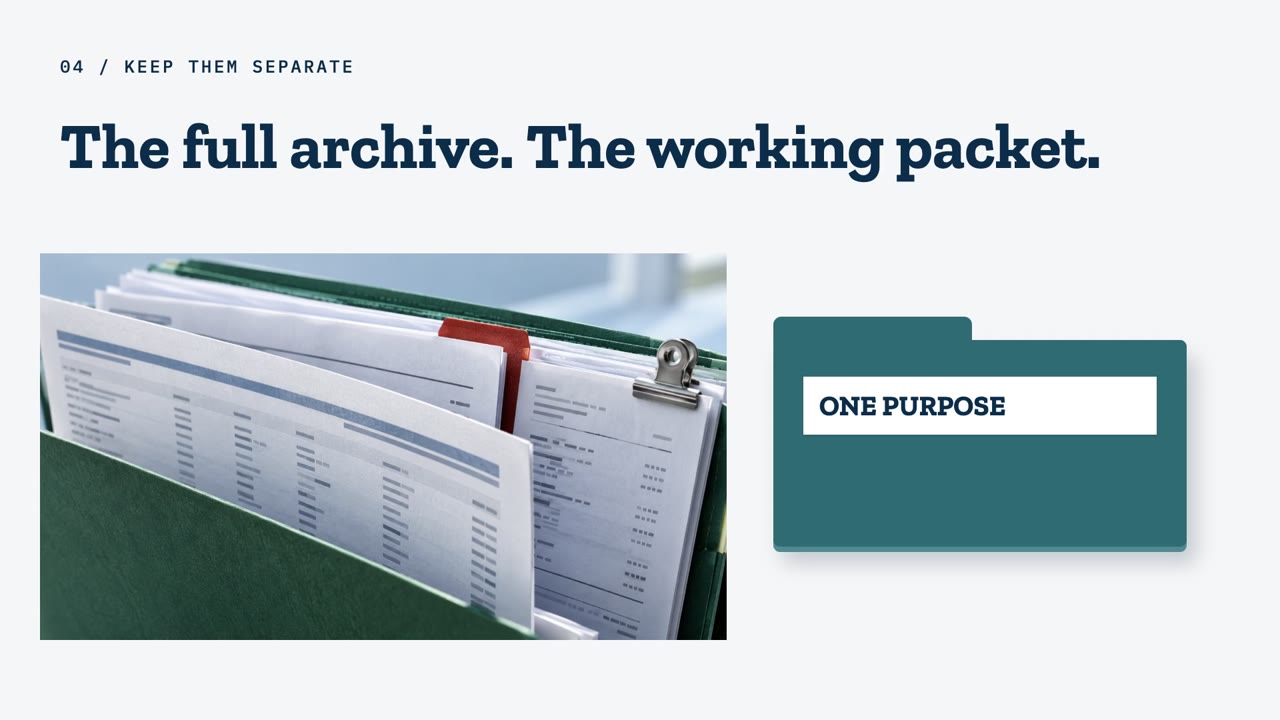
The archive is the larger collection built up over time. The working packet is smaller. It holds the copies you need for one court appearance, or for a meeting tied to that appearance, such as mediation. When the purpose changes, the packet can change. The archive stays where it is.
If you already keep the short factual note from episode 1, that note can point to the full record’s location. Today’s habit does not rebuild that log. It pulls a thin, labeled set of copies for the next court date.
Keep originals in the archive and make copies for the packet when you can. Some courts require an original. Whether you must bring one turns on the rules of evidence in your jurisdiction and your court’s official procedures. An attorney licensed in your state can advise you about what those rules mean for your case.
Why a pile of screenshots does not work
A dozen unlabeled images from a phone are hard to follow, even for the person who saved them. Nothing says which message came first, which hearing it concerns, or where the rest of the conversation is saved.
Organization is the fix, not a dramatic story stitched from screenshots. Findable copies with plain labels are easier to use. What you present to the court and how you argue must follow your jurisdiction’s rules of evidence and trial procedures. If possible, consult a licensed attorney in your state, along with any official resources from the court.
A worked example: a child support hearing
Here is an invented example from the episode. A parent has a court date in two weeks. Over the past few months the parent saved paystubs, text messages about visitation, daycare invoices, school emails and medical bills for the children. The files are saved in different folders under vague names: “final,” “new,” “important.”
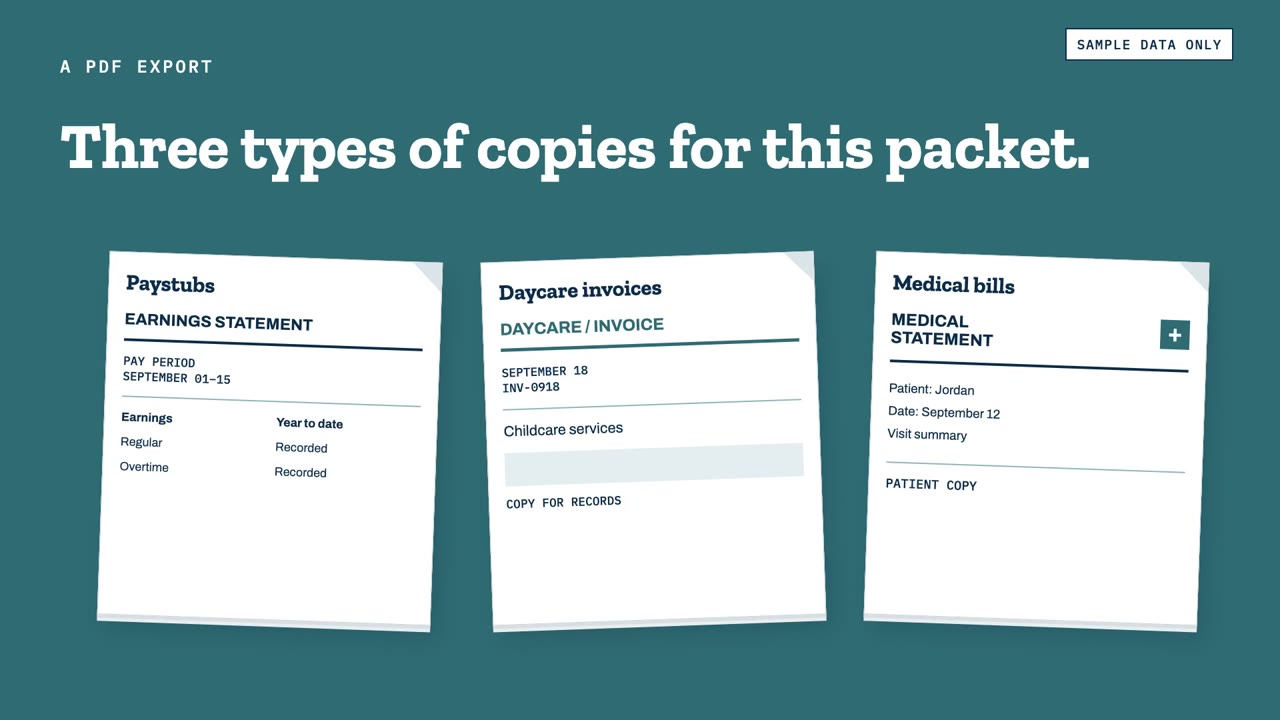
The parent’s purpose sentence is about income and the children’s expenses, so the parent exports three sets of copies as PDFs: paystubs, daycare invoices and medical bills. The visitation messages and the school emails stay organized in the archive, where the parent can still reach them.
Each folder in the packet gets an ordinary name. A short note in the packet points back to the section of the archive that holds the complete set. The packet stays thin, so the parent can find each copy at the hearing.
That is organization practice. Which records matter for a particular issue is a question for your court’s rules or an attorney licensed in your state.
Practice the courtroom separately
Organizing copies is one job. Getting used to a courtroom is another. Steadycase Courtroom Practice is a free browser game at play.getsteadycase.com. Fictional testimony arrives one line at a time, and the player decides whether to object. It builds general courtroom familiarity with fictional scenarios. It is not case-specific coaching, it does not teach your state’s rules of evidence, and you cannot paste your own hearing into it.
One manageable step for today
Write one sentence that names what you need on your next court date. Then make one folder for that date, and move one labeled copy into it. The rest stays in the archive.
The free Document Everything Method guide covers the short factual log this habit builds on: getsteadycase.com/document-everything.