Podcast › Episode 2

How to Organize Your Documents for a Family Court Hearing

Episode 2: A Working Packet for Your Court Date

By David Martino11:35October 15, 2026

Legal information and organization, not legal advice. Reading this page does not create an attorney-client relationship. Court rules vary by state and court.

The question

How do I get my files ready for a court hearing so I can find what I need?

Audio only
Also in your podcast appApple PodcastsSpotifyYouTubeRSS feed

Picture a court date two weeks away. Screenshots sit in one folder and emails in another. A half-finished note is saved somewhere else, next to a photo of a paper you meant to keep. Someone asks what you might need to show at the hearing, and the pile does not answer.

Episode 2 of The Steadycase Podcast takes the next step after the Document Everything habit: a working packet. A working packet is a thin set of labeled copies for one hearing date. Organizing those copies stays separate from courtroom strategy. This page walks through the habit, one fictional example, and a few practical follow-ups.

The short answer: a thin packet for one date

Treat the packet as three small habits rather than a project.

  1. Step 1Name the purposeOne ordinary sentence: what do you need on this court date?
  2. Step 2Copies, labeledPut labeled copies in the packet and keep a lasting set in your archive.
  3. Step 3Keep it separateThe archive stays large. The packet stays thin and changes with the purpose.

A pile of unlabeled screenshots is hard to search. Findable copies with plain labels are easier to use.

Slide titled Thin. Labeled. One hearing date., with an open archive box of files beside a folder labeled Working packet, copies for this date.
A thin set of copies for one hearing date, not a scattered pile.

Name the purpose in one sentence

Start with one ordinary sentence about what you need on this court date. You are not writing an argument. A plain purpose keeps the packet efficient and manageable, because anything outside that purpose stays in the archive.

The packet follows that purpose. Records outside it stay organized in the archive, ready for a later date. Whether a particular record relates to the issue being heard is a separate legal question.

How to label a file so you can find it again

Label each section of the packet with ordinary words. A useful name often starts with the date, then adds a short description of what the file is. Use words you would be comfortable saying out loud to a judge.

Do not invent a dramatic title that argues your case. “Final,” “new” and “important” are not labels. A date and a plain noun are.
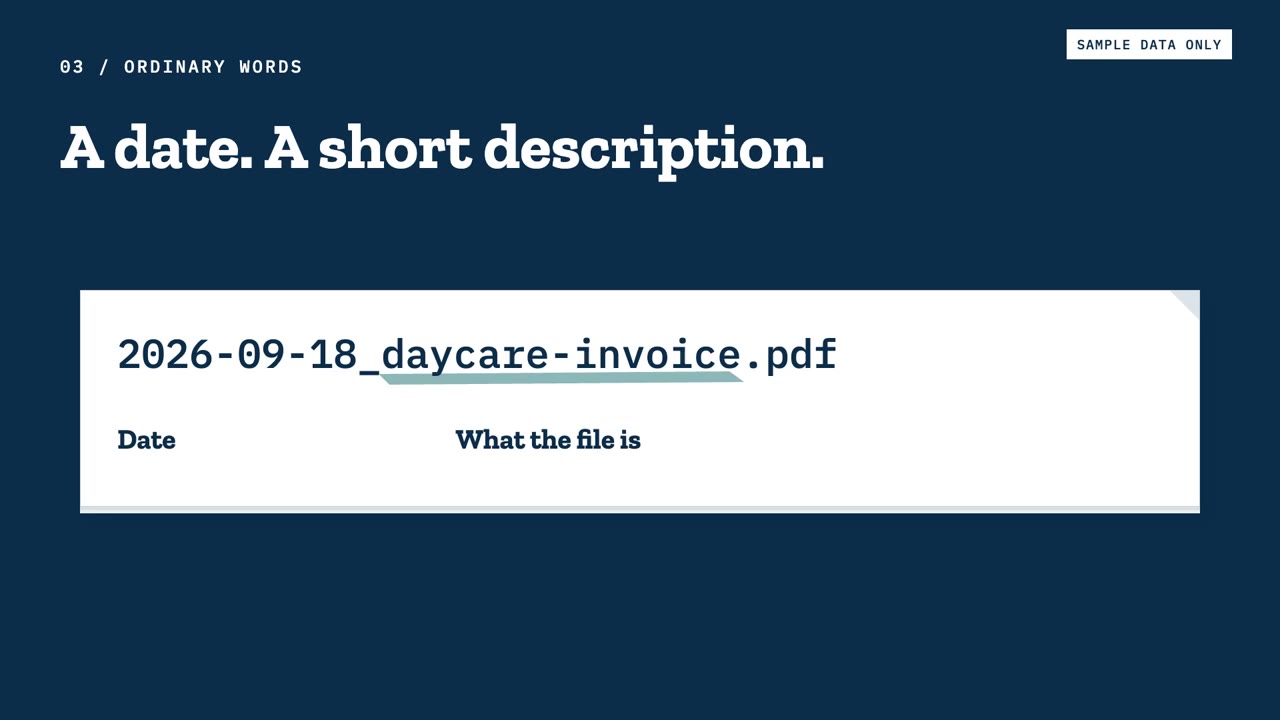
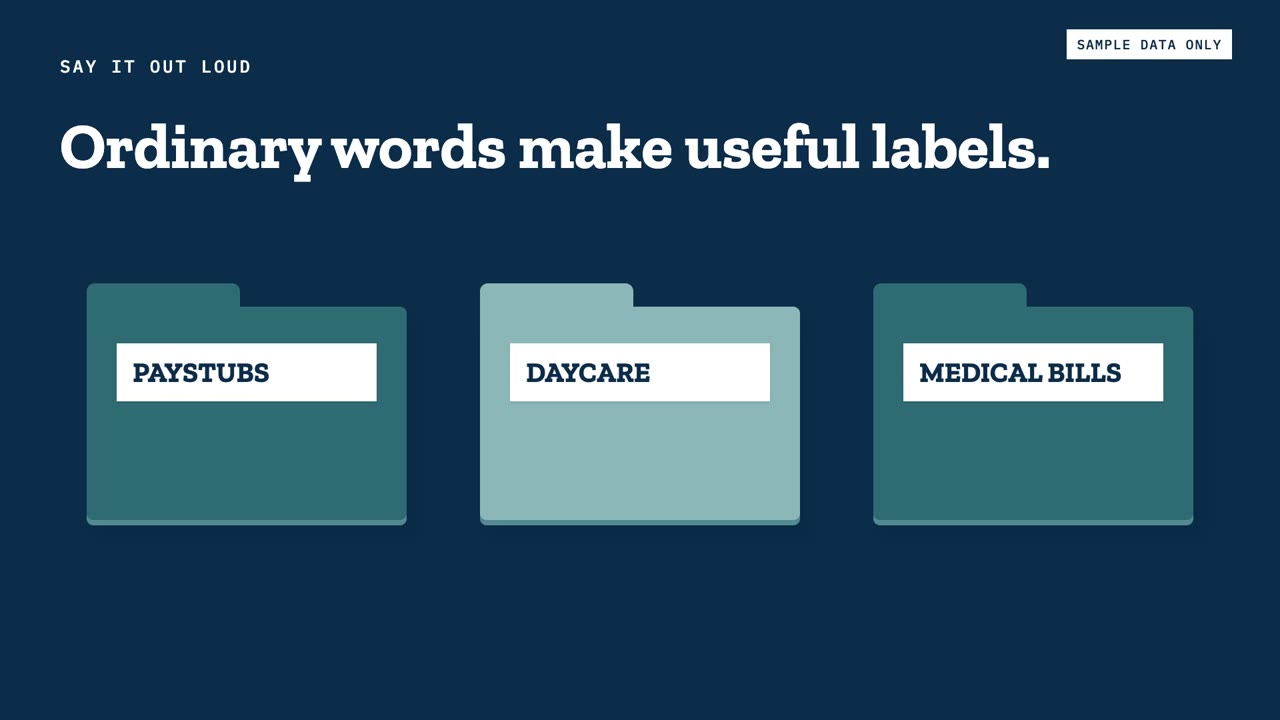
Slide titled A date. A short description., with a sample file name 2026-09-18_daycare-invoice.pdf labeled Date and What the file is, marked Sample data only.
Sample data only. The date first, then what the file is.
Slide titled Ordinary words make useful labels, with three folders labeled Paystubs, Daycare and Medical bills, marked Sample data only.
Sample data only. Folder names you could say out loud in court.

The archive and the working packet

The archive is the larger collection built up over time. The working packet is smaller. It holds the copies you need for one court appearance, or for a meeting tied to that appearance, such as mediation. When the purpose changes, the packet can change. The archive stays where it is.

If you already keep the short factual note from episode 1, that note can point to the full record’s location. Today’s habit does not rebuild that log. It pulls a thin, labeled set of copies for the next court date.

Keep originals in the archive and make copies for the packet when you can. Some courts require an original. Whether you must bring one turns on the rules of evidence in your jurisdiction and your court’s official procedures. An attorney licensed in your state can advise you about what those rules mean for your case.
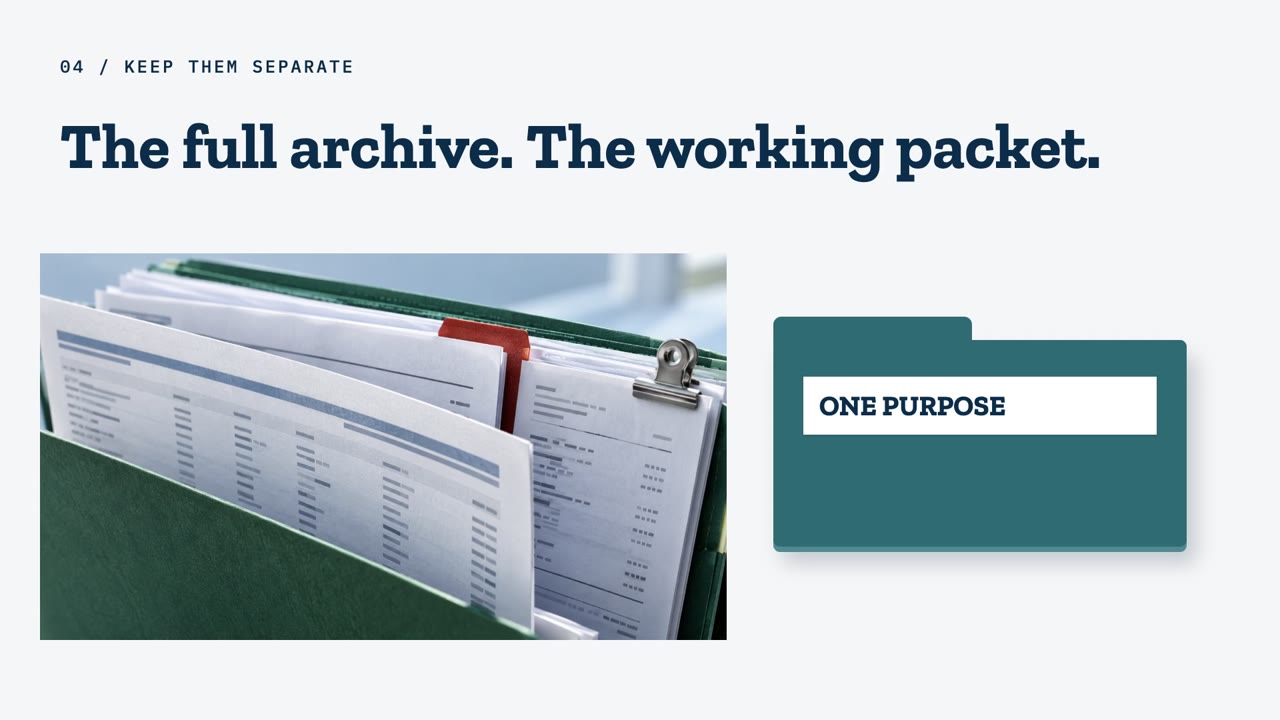
Slide titled The full archive. The working packet., with a photo of a filled file drawer beside a folder labeled One purpose.
The archive stays large. The packet serves one purpose.

Why a pile of screenshots does not work

A dozen unlabeled images from a phone are hard to follow, even for the person who saved them. Nothing says which message came first, which hearing it concerns, or where the rest of the conversation is saved.

Organization is the fix, not a dramatic story stitched from screenshots. Findable copies with plain labels are easier to use. What you present to the court and how you argue must follow your jurisdiction’s rules of evidence and trial procedures. If possible, consult a licensed attorney in your state, along with any official resources from the court.
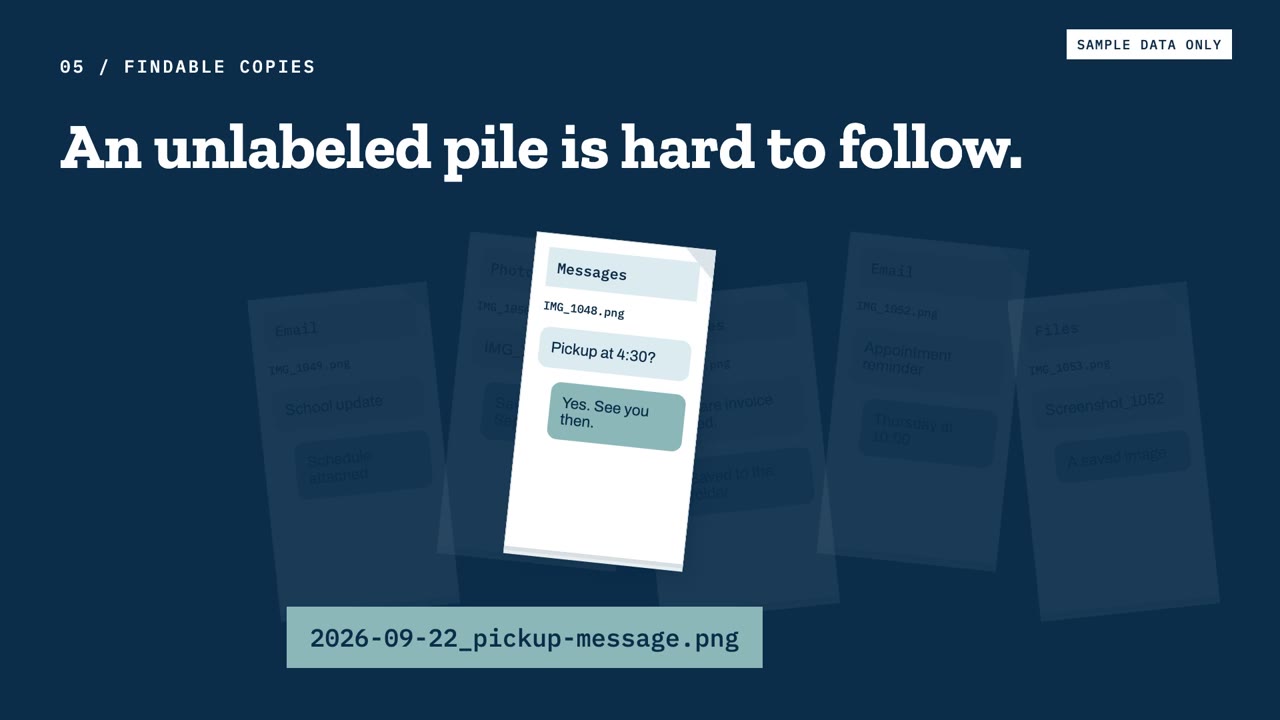
Slide titled An unlabeled pile is hard to follow, with scattered phone screenshots and one labeled file, 2026-09-22_pickup-message.png, marked Sample data only.
Sample data only. One labeled copy stands out from the unlabeled pile.

A worked example: a child support hearing

Here is an invented example from the episode. A parent has a court date in two weeks. Over the past few months the parent saved paystubs, text messages about visitation, daycare invoices, school emails and medical bills for the children. The files are saved in different folders under vague names: “final,” “new,” “important.”

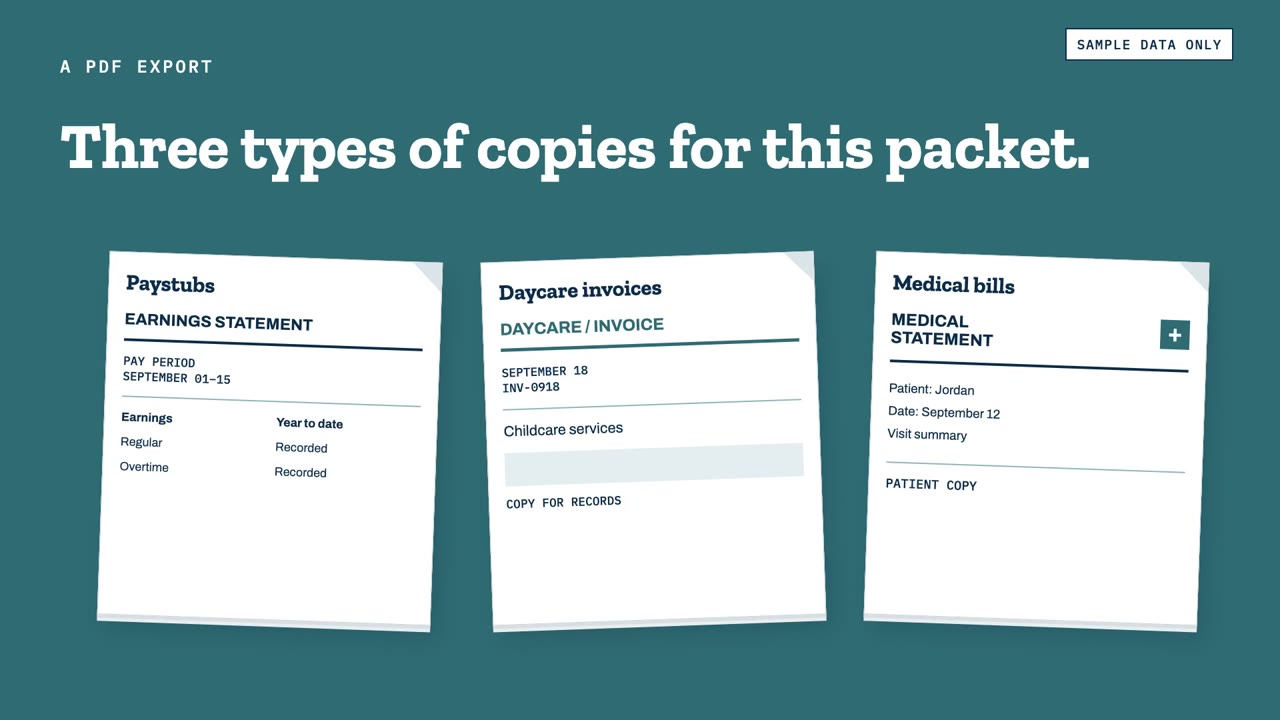
The parent’s purpose sentence is about income and the children’s expenses, so the parent exports three sets of copies as PDFs: paystubs, daycare invoices and medical bills. The visitation messages and the school emails stay organized in the archive, where the parent can still reach them.

Each folder in the packet gets an ordinary name. A short note in the packet points back to the section of the archive that holds the complete set. The packet stays thin, so the parent can find each copy at the hearing.

That is organization practice. Which records matter for a particular issue is a question for your court’s rules or an attorney licensed in your state.
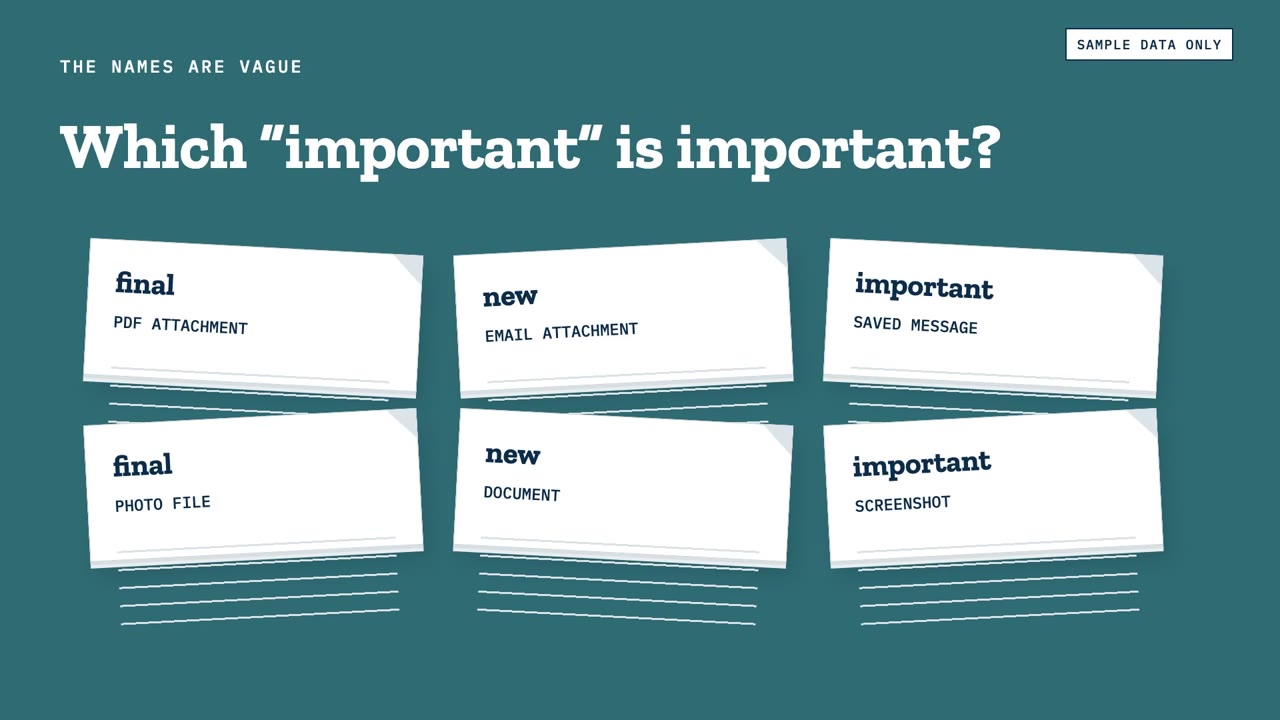
Slide titled Which important is important?, with six files named final, new and important, marked Sample data only.
Sample data only. The vague names from the example.
Slide titled Three types of copies for this packet, with sample pages labeled Paystubs, Daycare invoices and Medical bills, marked Sample data only.
Sample data only. The three copies for the child support packet.

Practice the courtroom separately

Organizing copies is one job. Getting used to a courtroom is another. Steadycase Courtroom Practice is a free browser game at play.getsteadycase.com. Fictional testimony arrives one line at a time, and the player decides whether to object. It builds general courtroom familiarity with fictional scenarios. It is not case-specific coaching, it does not teach your state’s rules of evidence, and you cannot paste your own hearing into it.

One manageable step for today

Write one sentence that names what you need on your next court date. Then make one folder for that date, and move one labeled copy into it. The rest stays in the archive.

The free Document Everything Method guide covers the short factual log this habit builds on: getsteadycase.com/document-everything.

Slide titled One date. Labeled copies. Findable., with three labels: Thin packet for this court date, Plain labels, Full archive.
The habit in one line: one date, labeled copies, findable.

Practice before the hearing, with fictional cases

Steadycase Courtroom Practice is a free browser game. Fictional testimony arrives one line at a time, and you decide whether to object. No sign-up, nothing to install, and it runs on a phone or a computer. Optional one-time packs: Family law pack $9, Advanced / trial-ready $12, Exam cram $7.

Play Courtroom Practice for free

Starting from scratch? Get the free Document Everything Method

Common questions

What belongs in the working packet, and what stays in the archive?

The archive holds the larger collection over time. The working packet holds copies for one purpose: your next court appearance, or a meeting tied to it, such as mediation. Everything else stays organized and reachable in the archive. Whether a particular record matters for a hearing is a question for your court’s rules or an attorney licensed in your state.

Should I move my originals into the working packet?

When possible, keep originals in the archive and make copies for the packet. You may need an original for court. In that case, keep copies with the original so you still have a lasting set. Whether you must bring an original turns on the rules of evidence in your jurisdiction and your court’s official procedures.

Does organizing a packet mean I am deciding what to show in court?

No. Organizing copies is not the same as deciding what to file, what to offer, or how to argue. Those choices turn on the rules of evidence and the procedures followed by your court. The habit only helps you find what you already have.

How should I name the files?

Start with the date, then add a short description in ordinary words, such as a daycare invoice or a paystub. Avoid titles that argue your case, and avoid vague words such as “final,” “new” or “important.”

What if the hearing covers only one issue?

The packet follows the purpose sentence you write for that date. Records outside that purpose stay organized in the archive, and a new packet can be built for a later date. Whether a particular record relates to the issue being heard is a legal question; your court’s official resources or an attorney licensed in your state can help.

Do I need a separate packet for mediation?

The packet serves one purpose, and a meeting tied to a court appearance, such as mediation, can share that purpose. When the purpose changes, the packet can change. The archive stays where it is.

Courtroom Practice

A free browser game built on fictional cases. Optional packs cost $7, $9 and $12.

Play for free

Document Everything Method

The habit from episode one, as a free guide.

Get the free guide
Read the transcript

Picture this. Screenshots in one folder. Emails in another. A half-finished note somewhere else. A photo of a paper you meant to keep.

Someone asks what you might need to show for a court hearing. The pile does not answer.

So here is the question for today: how do I get my files ready for a court hearing so I can find what I need?

I'm David Martino. This is Steadycase — notebooks and tools for organizing legal information in family-law situations. Steadycase products provide legal information and organization, not legal advice. Using Steadycase does not create an attorney-client relationship.

This episode builds on the Document Everything habit from our first episode. We are not re-teaching that short log today.

We are talking about the next step: how to organize what you might need to show a judge in your court case so you can find it on your hearing date.

By the end, you should understand the concept of a working packet. A working packet is a thin set of labeled copies for one hearing date, not a dump of every screenshot into one messy, scattered pile. Organization stays separate from courtroom strategy. Those are different jobs.

I will teach the habit in plain terms. I will walk through one short fictional example. I will point to an optional practice tool. Then I will answer a few practical follow-ups. Facts and folders only. Not legal strategy.

When I say get your files ready for a court hearing, I mean a calm, organized process. This is not a courtroom script.

First, name the purpose of this working packet in one ordinary sentence.

What do you actually need on this court date?

You are not writing an argument.

You are naming a purpose, so the working packet remains efficient and manageable

Second, put copies in the working packet when you can. Keep a lasting set in your archive. Do not assume you can leave every original at home. Some courts require an original. Whether you must bring an original turns on the rules of evidence in your jurisdiction and your court's official procedures. A licensed attorney can advise you about what those rules mean for your case. This habit does not decide that for you.

Third, label the sections of your working packet with ordinary words. A useful name often starts with the date, then add a short description of what the file is, using words you would be comfortable saying out loud to a judge later on.

Do not invent a dramatic title that argues your case. Let the facts speak for themselves.

Fourth, keep the working packet separate from the full archive. The archive can be large. The working packet is smaller. It holds the copies you need for a court appearance or other meetings, such as mediation. When the purpose changes, the packet can change. The archive stays where it is.

Fifth, do not stitch random screenshots into a courtroom narrative. A pile of unlabeled images is unlikely to form a coherent story. Organization allows you to assemble findable copies with plain labels into a coherent narrative.

Ultimately, though, what you present to the court and what you argue must follow your jurisdiction's rules of evidence and trial procedures. If possible, consult with a licensed attorney in your state for guidance, along with any official resources provided by the court.

If you already keep a short factual note from the Document Everything strategy, that note can point to where the full record is stored. Today we are not rebuilding that log. Rather, we are pulling a thin, labeled set of copies for the next court date.

Let's walk through an example.

A parent has a court date coming up in two weeks. Over the past few months, the parent diligently saved paystubs, text messages about visitation, daycare invoices, school emails, and medical bills for the children. Unfortunately, those files are stored in different folders. The names are vague — "final," "new," "important."

To get on track, the parent creates a working packet limited to the issues before the court at the upcoming court date. This is not the time to rebuild the entire file. For example, if the court hearing is limited to child support, the parent assembles documents relating to the parties' income and the minor children's expenses. While there may be problems with visitation, those documents do not go in the working packet for the child support hearing. They remain in the archive. Create a new working packet for the next court hearing when visitation is an issue the court will consider.

In creating the working packet for the child support hearing, the parent makes a PDF export of three of the items listed earlier - paystubs, daycare invoices, and medical bills. The text messages about visitation and the school emails remain in the archive for a later hearing, when the court will consider those documents.

When labeling folders in the working packet, use ordinary words that you would be comfortable saying out loud to the court, if necessary. The working packet can include short notes pointing back to the relevant sections of the archive, where the complete set of files is stored. For a working packet, though, do not include every screenshot from the last year "just in case." The packet should be efficiently confined to the documents that relate to the issue at hand so that you can calmly find the documents when they are needed

That is organization practice. It is not advice about what the court will accept. It is not a tip for winning the hearing.

If you want to build general familiarity with a courtroom, Steadycase offers Courtroom Practice. It is a free browser game at play.getsteadycase.com.

It uses fictional scenarios to build general courtroom skills. It is not case-specific coaching. It does not train you on your state's rules of evidence. You cannot paste your hearing into the game.

There is an optional Family Law Pack for a one-time nine dollars if you want more fictional practice. The base game is free to try. Either way, it is optional support for a calm rehearsal. It is not a substitute for official court rules, nor is it legal advice. If possible, hire a licensed attorney in your area to review your case with you.

That is the basic method. Let me answer a few practical questions that flow from it.

Question one. What belongs in the working packet versus the archive?

The archive holds the larger collection over time. The working packet holds copies for one purpose — your next court appearance, or a meeting tied to that appearance, such as mediation. If you are unsure, leave it in the archive. It is easier to add one copy later than to hunt through an oversized working packet while under stress in a courtroom.

Question two. Should I move my originals into the working packet?

When possible, keep originals in the archive and make copies for the working packet. That is not a hard-and-fast rule, because you may need an original for court. In those instances, keep copies with the original so you still have a lasting set. Whether you must bring an original turns on the rules of evidence in your jurisdiction and your court's official procedures. If you are required to submit the original into evidence, ask for it back when the hearing is over, then return it to the archive.

Question three. Does organizing a packet mean I am deciding what to show in court?

No, not necessarily. Organizing copies is not the same as deciding what to file, what to offer, or how to argue your case. Those choices turn on the rules of evidence and the procedures followed by your court. This habit only helps you find what you already have when you need it.

Before we finish, let's bring it together.

Having files ready for a court hearing means a thin working packet of labeled copies for that date — separate from the full archive, and findable when you need them. It builds on the Document Everything method. It does not replace official instructions, nor does it replace the guidance from an attorney hired to represent you in your case.

If you want to practice with fictional scenarios, Steadycase offers a free Courtroom Practice game. Go to play.getsteadycase.com.

Steadycase is legal information and organization, not legal advice.

Thanks for listening.