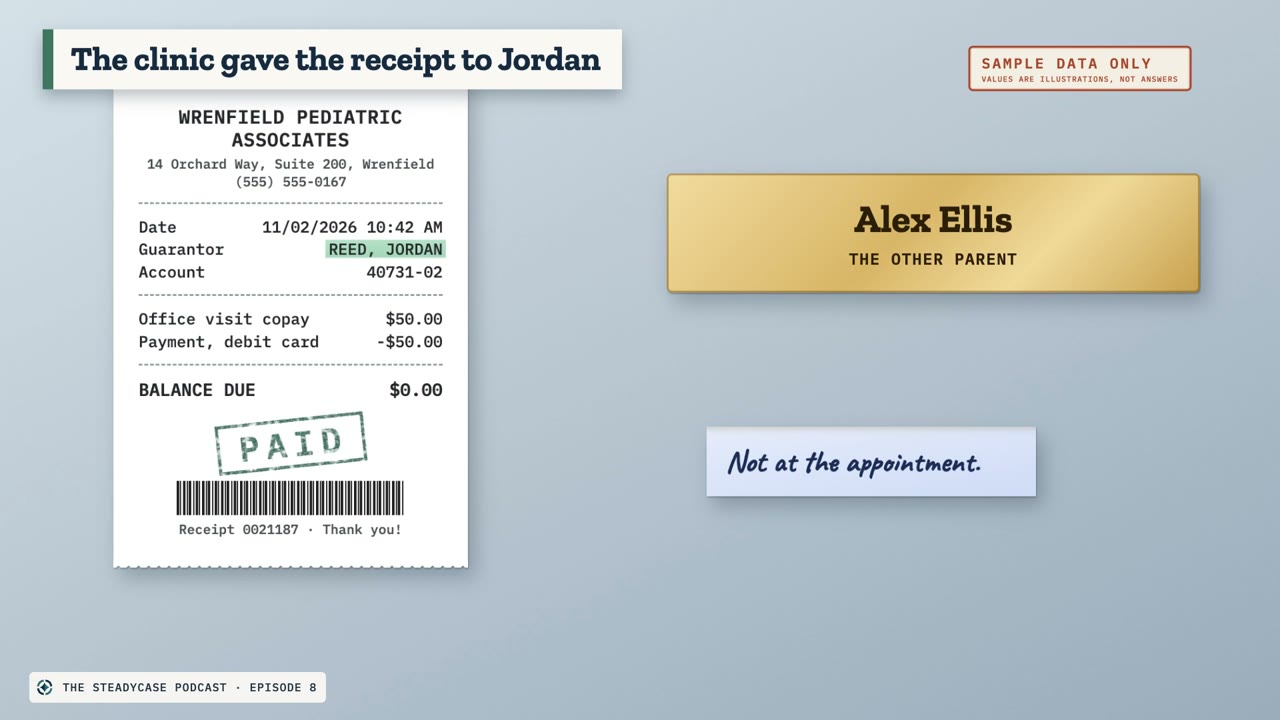
Jordan Reed gets home from the pediatrician’s office with a fifty-dollar receipt. Jordan paid the whole copay. Alex Ellis, the other parent, wasn’t at the appointment. As far as Alex knows, the visit could have cost fifteen dollars, or fifty, or nothing at all.
So Jordan has another job tonight. Find the paragraph in the order, figure out Alex’s share, and get a readable copy of the receipt to Alex. Once Jordan does all that, one part is still out of Jordan’s hands. Alex has to send the money.
Episode 8 of The Steadycase Podcast picks up with Jordan and Alex, two fictional parents from earlier episodes. Later in the month there’s been no reply, and Jordan is still out the full fifty dollars. This page follows the episode: the first request, the follow-up, three common questions about shared expenses, and a record of several requests over time.
Find the paragraph that covers the expense
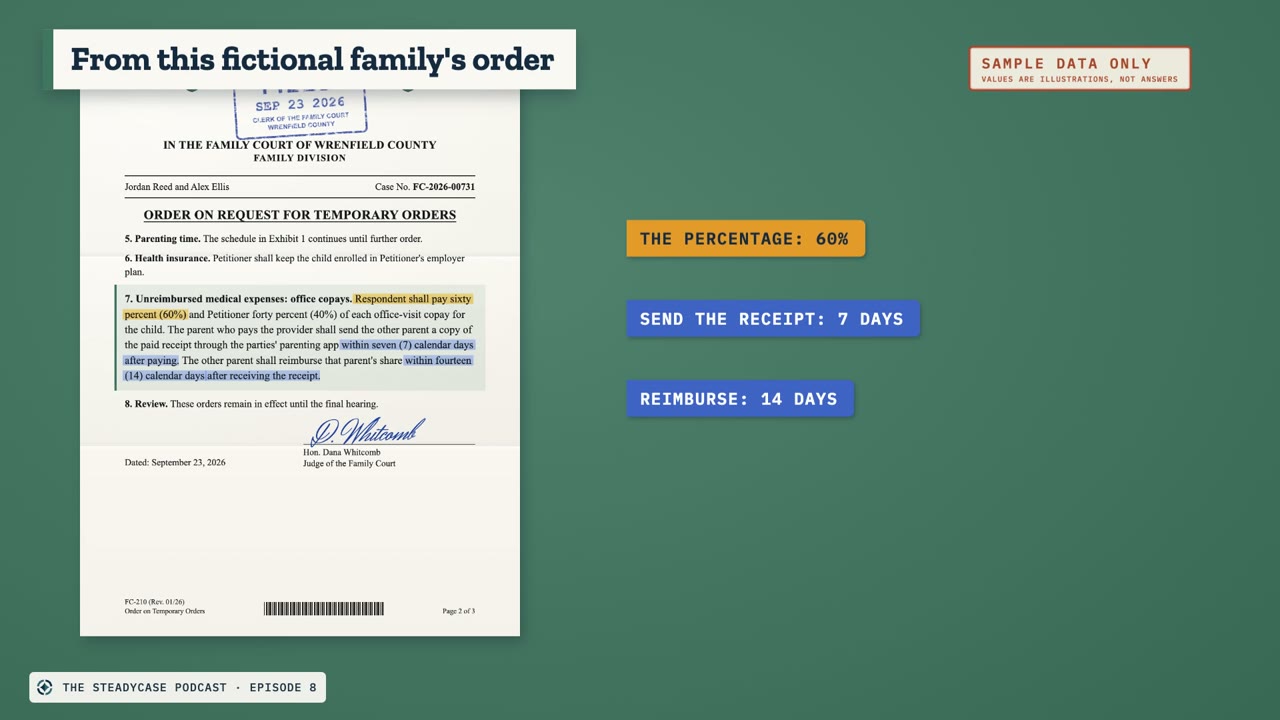
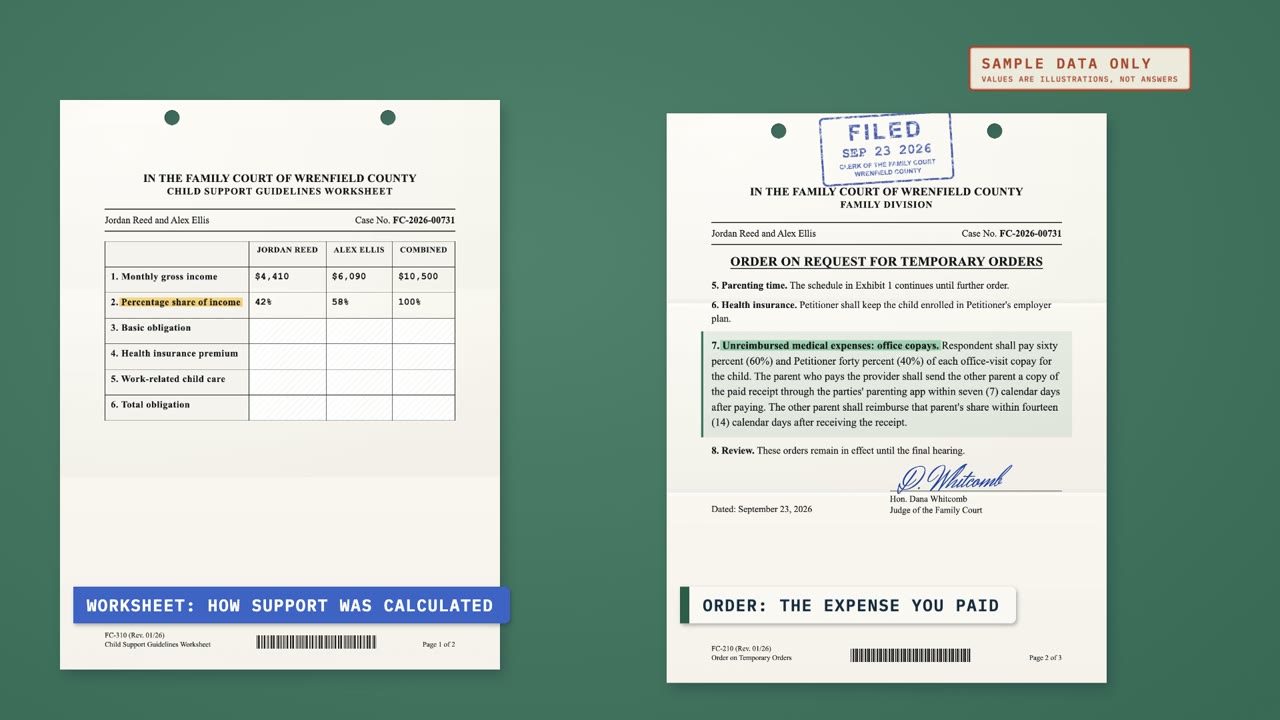
It’s November 2. Jordan puts the receipt on the kitchen table and pulls up the order. For this example, we’ve given this family an order that specifically covers office copays. It assigns Alex sixty percent of the cost. Jordan has seven calendar days after paying the clinic to send Alex the receipt through the parenting app. Alex has fourteen calendar days after receiving the receipt to reimburse Jordan.
The percentage and both time periods come from this fictional family’s order. If you’re sitting at your own kitchen table with a receipt, the wording in your papers may be quite different.
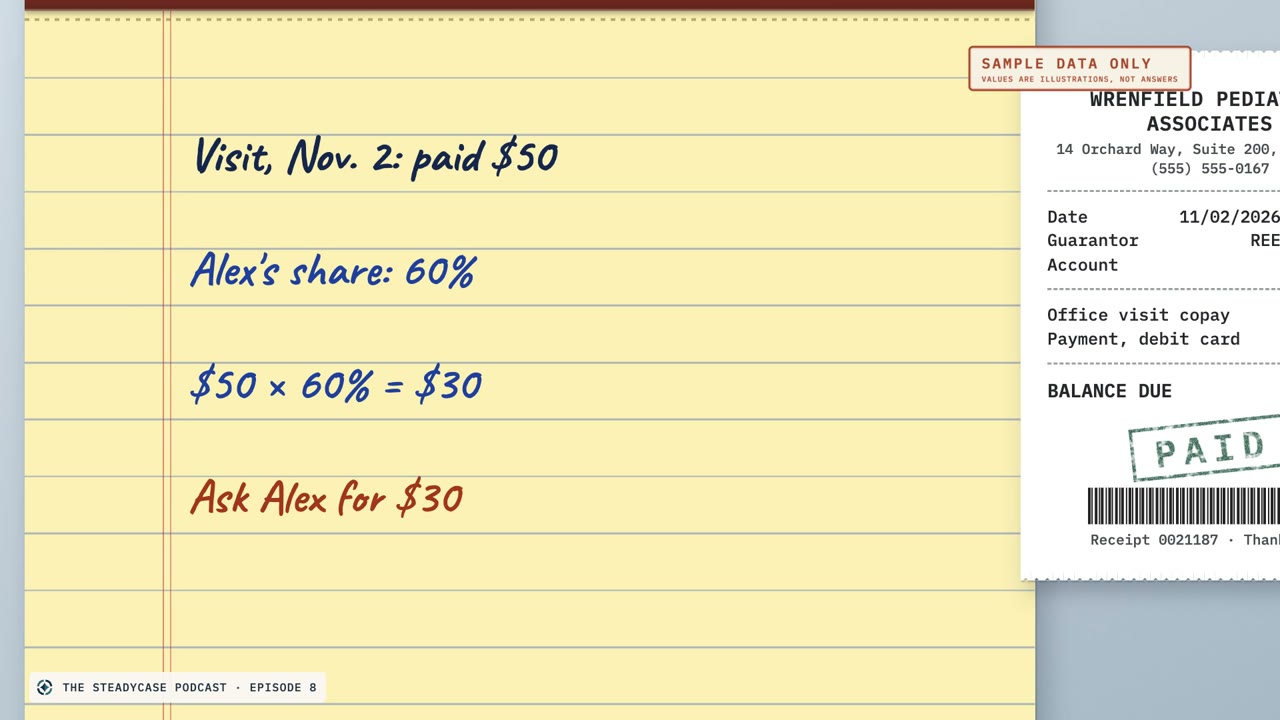
For Jordan, sixty percent of fifty dollars comes to thirty dollars. That’s the amount of Jordan’s request.
A request the other parent can check
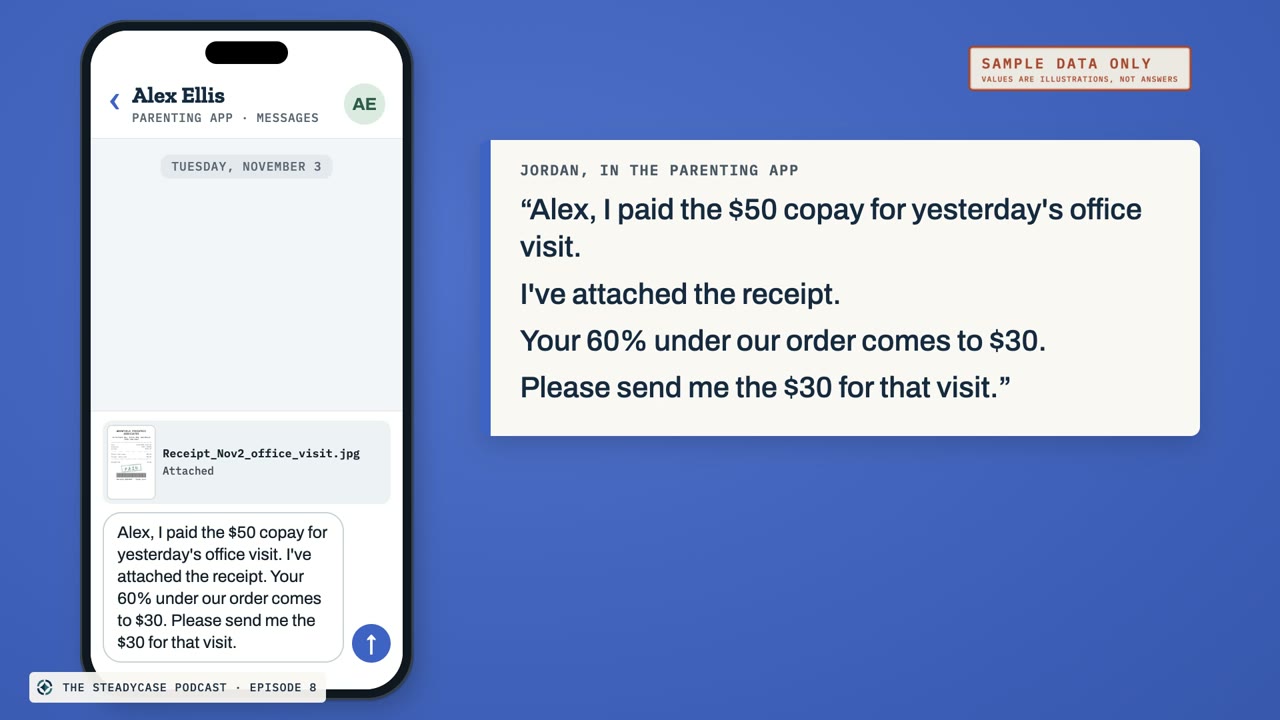
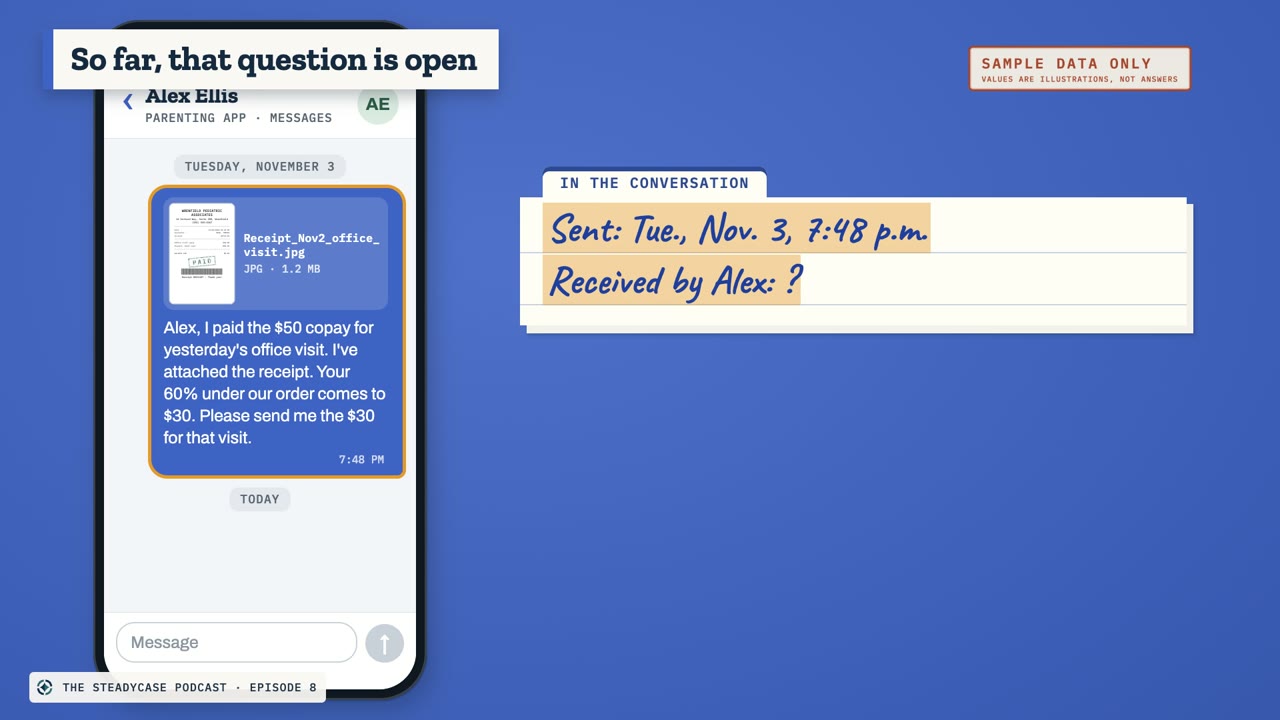
On November 3, Jordan opens the parenting app, attaches a copy of the paid receipt, and sends this message: “Alex, I paid the fifty-dollar copay for yesterday’s office visit. I’ve attached the receipt. Your sixty percent under our order comes to thirty dollars. Please send me the thirty for that visit.”
Imagine getting that message on Alex’s side. You can see which appointment Jordan means. You can check the amount against the receipt. You can also tell how Jordan got from fifty dollars at the clinic to thirty dollars in the request. The parents can identify the visit by date without putting the child’s diagnosis into a payment memo.
Jordan keeps the clinic receipt and the conversation with the attachment. If you’ve ever gone looking for a photo you sent somebody, you know the difference between finding the photo on your phone and finding the message that carried it. In this case Jordan may need both.
Two weeks later: no reply
Now it’s November 20. That fifty dollars came out of Jordan’s account more than two weeks ago, and there’s no thirty-dollar reimbursement. Jordan scrolls back to November 3. The request is there. The receipt is attached. There’s no reply from Alex and no acknowledgment of receipt.
This is the part that wears on people. Jordan got the child to the appointment, paid the clinic, found the order, and sent the receipt. Now Jordan is back in the same conversation, deciding how to ask for the same money a second time.
Jordan’s first thought might be, “Fourteen days have gone by. I sent it on the third.” Go back to the sentence in this family’s order. Alex has fourteen calendar days after receiving the receipt. Jordan can point to the date the message went out. What in the conversation tells Jordan when Alex actually received the attachment? So far, that question is open. The silence doesn’t tell us whether Alex opened it, had trouble with it, disagrees with the request, or simply hasn’t answered.
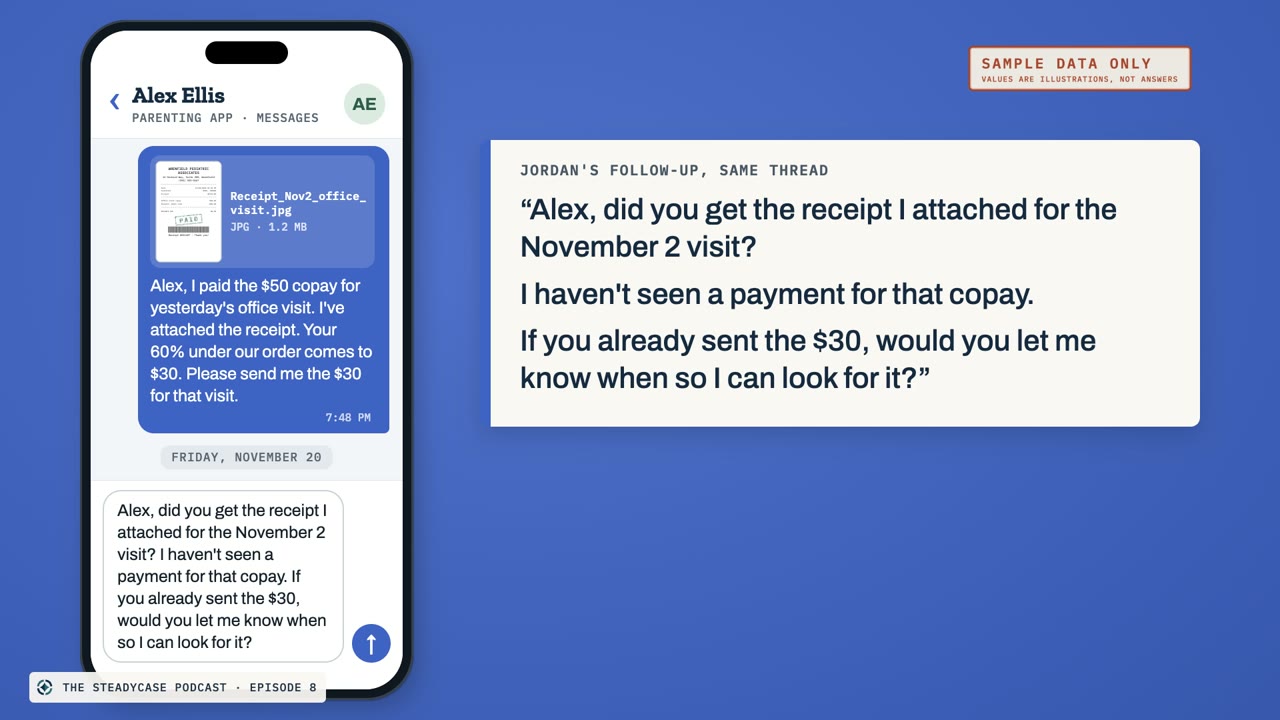
A follow-up in the same conversation
Here’s one way Jordan could follow up in the same thread: “Alex, did you get the receipt I attached for the November 2 visit? I haven’t seen a payment for that copay. If you already sent the thirty dollars, would you let me know when so I can look for it?”
There’s a reason for that last sentence. Jordan has checked and can’t identify a payment. Alex might have information Jordan doesn’t. If Alex has a transfer date, Jordan can check it. If Alex couldn’t open the receipt, Jordan can send another copy. If Alex doesn’t answer this message either, Jordan still has an accurate account of both attempts.
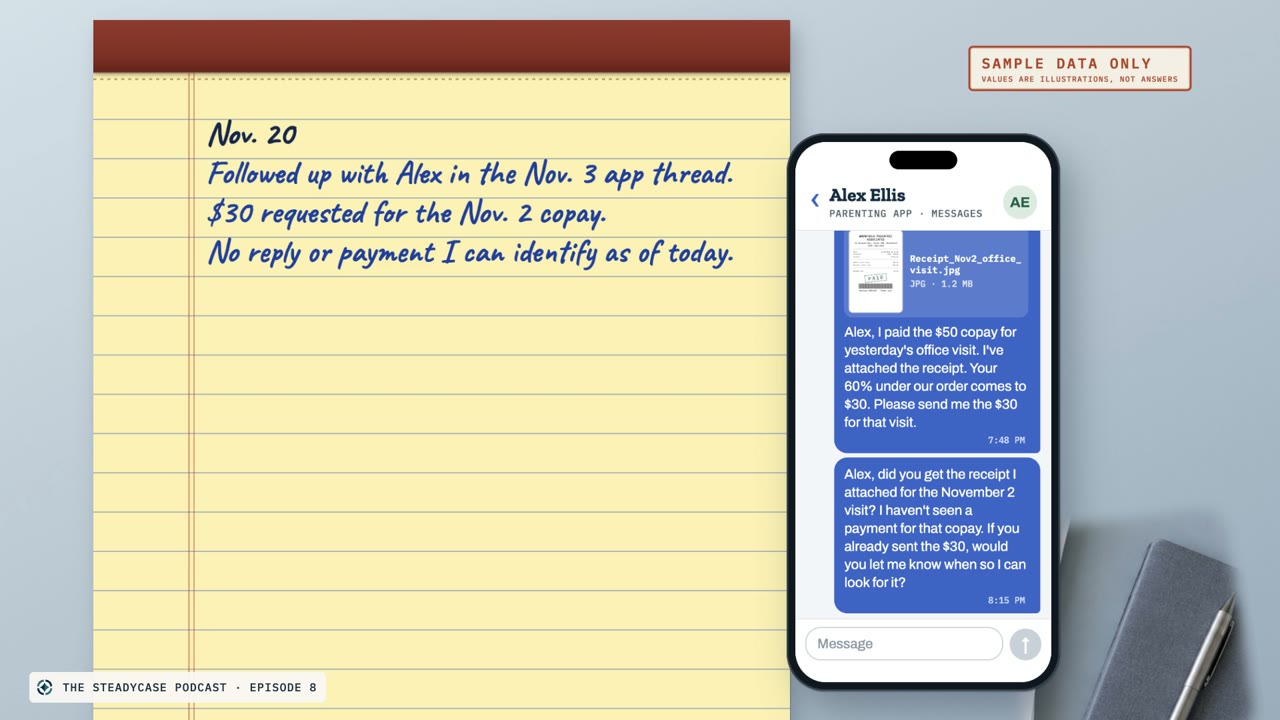
Before putting the phone down, Jordan might make one note for the file: “November 20. Followed up with Alex in the November 3 app thread. Thirty dollars requested for the November 2 copay. No reply or payment I can identify as of today.” That leaves room for the next entry. It also spares Jordan from having to remember, a month from now, whether Jordan ever sent the second message.
“Is the percentage on my Child Support Guidelines worksheet the one I use for a copay?”
These three questions come up when parents share a child’s expenses. A worksheet helps explain how support was calculated. For a particular bill, look for the part of your order or agreement that deals with the expense you paid. Does it cover office copays? Does it give each parent’s share?
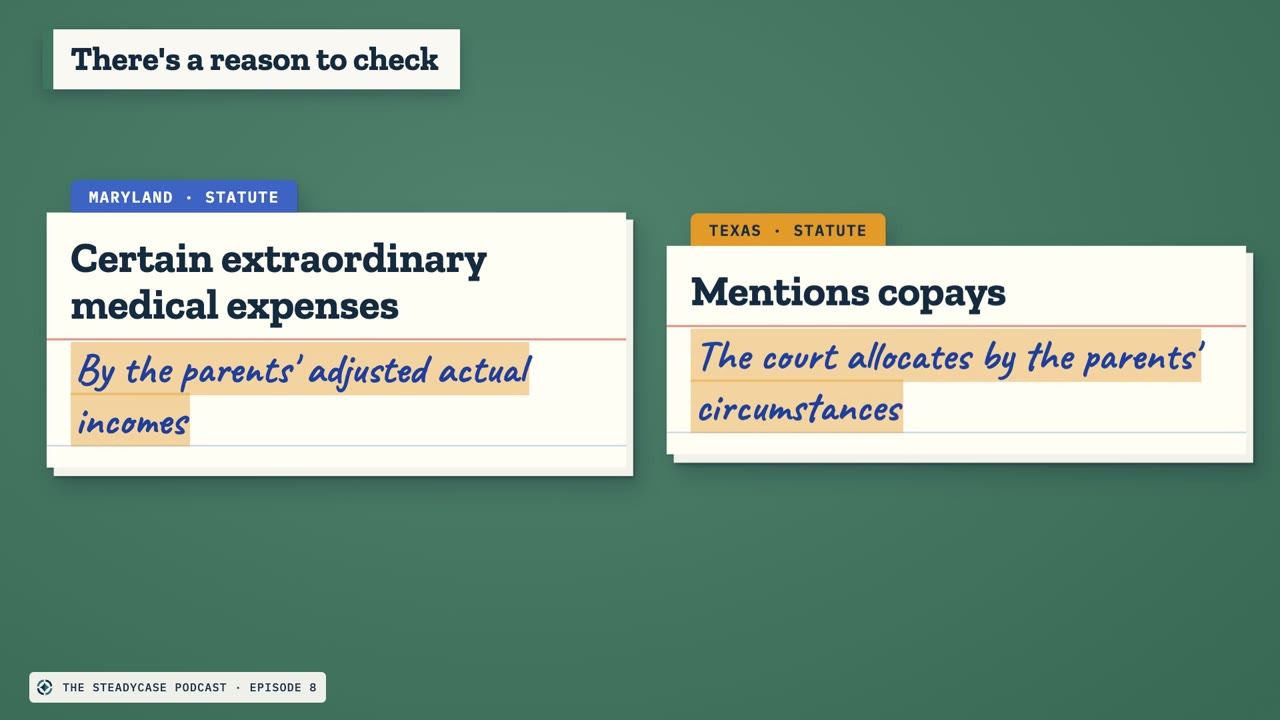
There’s a reason to check. Maryland allocates certain extraordinary medical expenses according to the parents’ adjusted actual incomes. Texas specifically mentions copays and directs the court to allocate those costs according to the parents’ circumstances. Jordan can ask for thirty dollars because Jordan and Alex’s order expressly covers this visit and assigns Alex sixty percent.
If you and the other parent disagree about whether regular support already covers a bill, bring the paragraph and the bill to an attorney who can read them together.
“The other parent says the attachment wouldn’t open. What do I do with that message?”
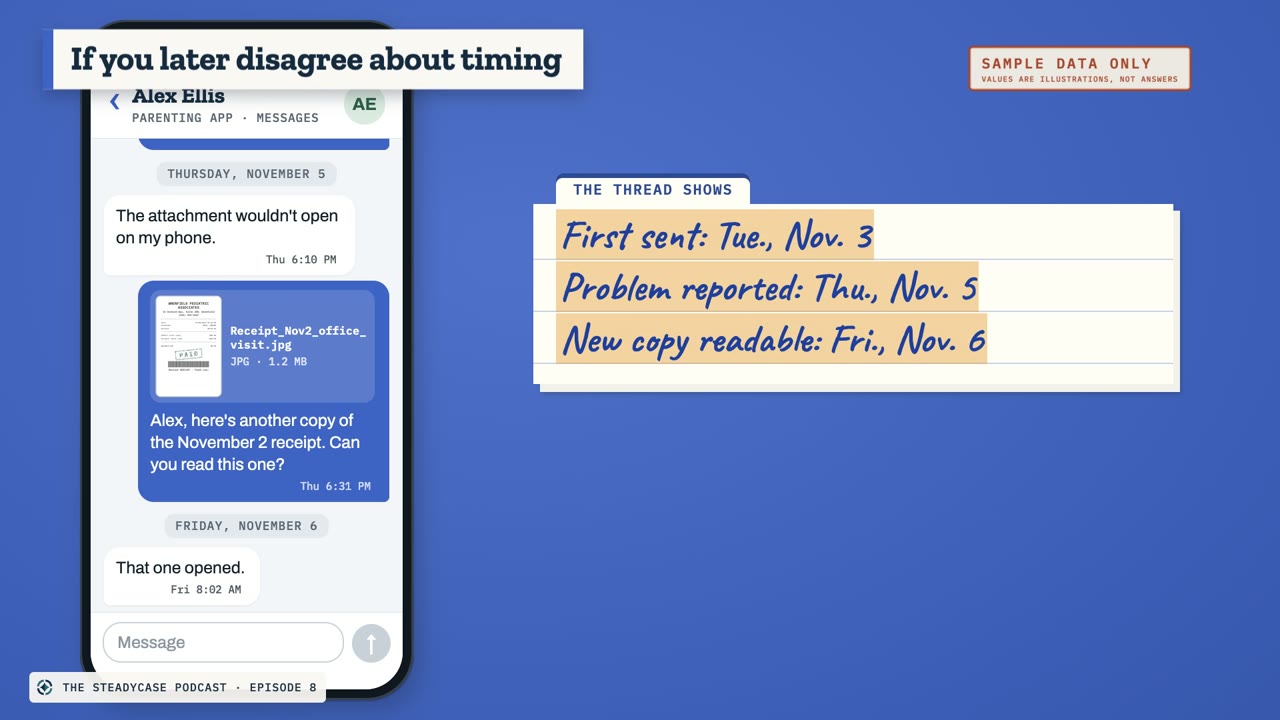
Keep it with the request. Jordan could open the original receipt, make sure the date and amount are legible, and send a fresh copy in the same conversation: “Alex, here’s another copy of the November 2 receipt. Can you read this one?”
If Alex replies that it opened, keep that reply too. Now the thread shows when Jordan first sent the receipt, when Alex reported the problem, and when Alex confirmed the new copy was readable. If the parents later disagree about timing, all three dates are there.
“I asked for thirty dollars. The other parent sent twenty. What am I supposed to do now?”
Suppose Alex sends twenty dollars and labels it for the November 2 copay. Jordan could reply in the same thread: “I got the twenty for the office visit. Thanks. I asked for thirty. Can you send the remaining ten, or is there something about the amount we need to talk about?”
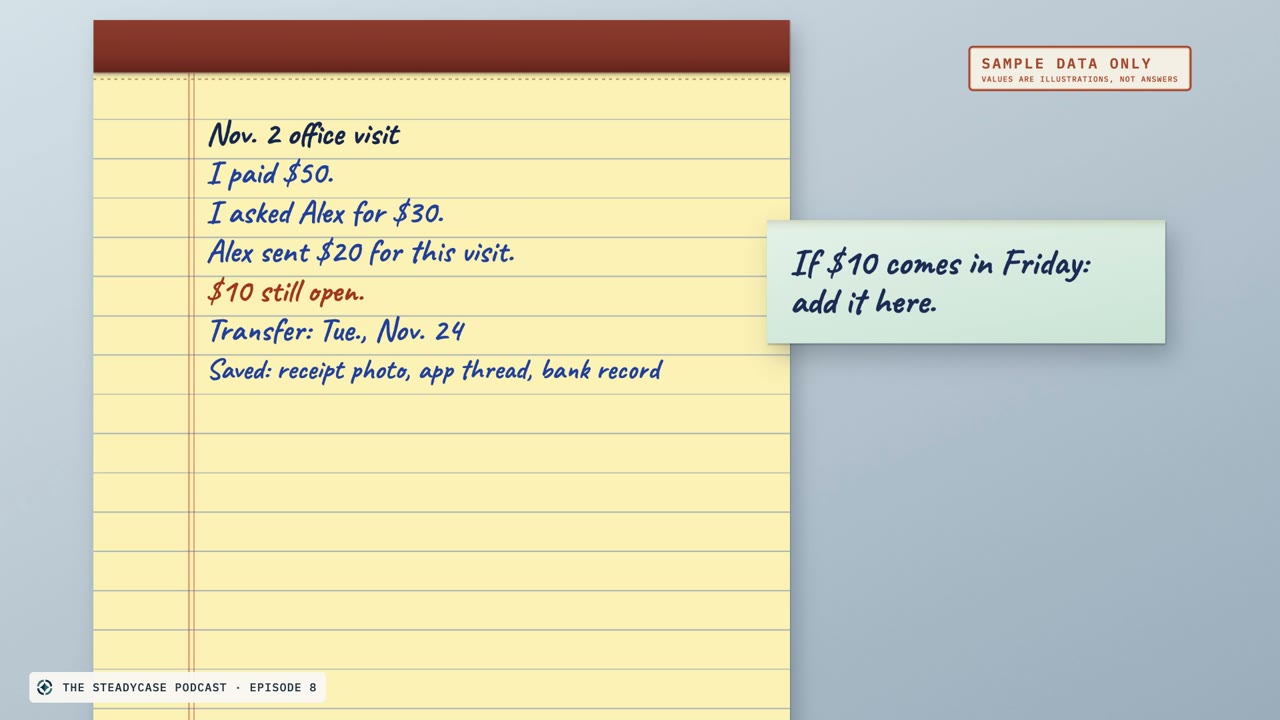
Here’s what Jordan writes down: “November 2 office visit. I paid fifty dollars. I asked Alex for thirty. Alex sent twenty for this visit. Ten dollars still open.” Jordan adds the date of the transfer and where the receipt, app conversation, and payment record are saved. If the other ten comes in on Friday, Friday’s payment goes into that same entry.
Would Jordan take time off work to meet with an attorney or go to court over one ten-dollar difference? Probably not. Jordan can decide how much time to spend on it today and still keep track of the money. Ten dollars is our hypothetical. For another family, the first bill alone might be substantial.
When the requests add up
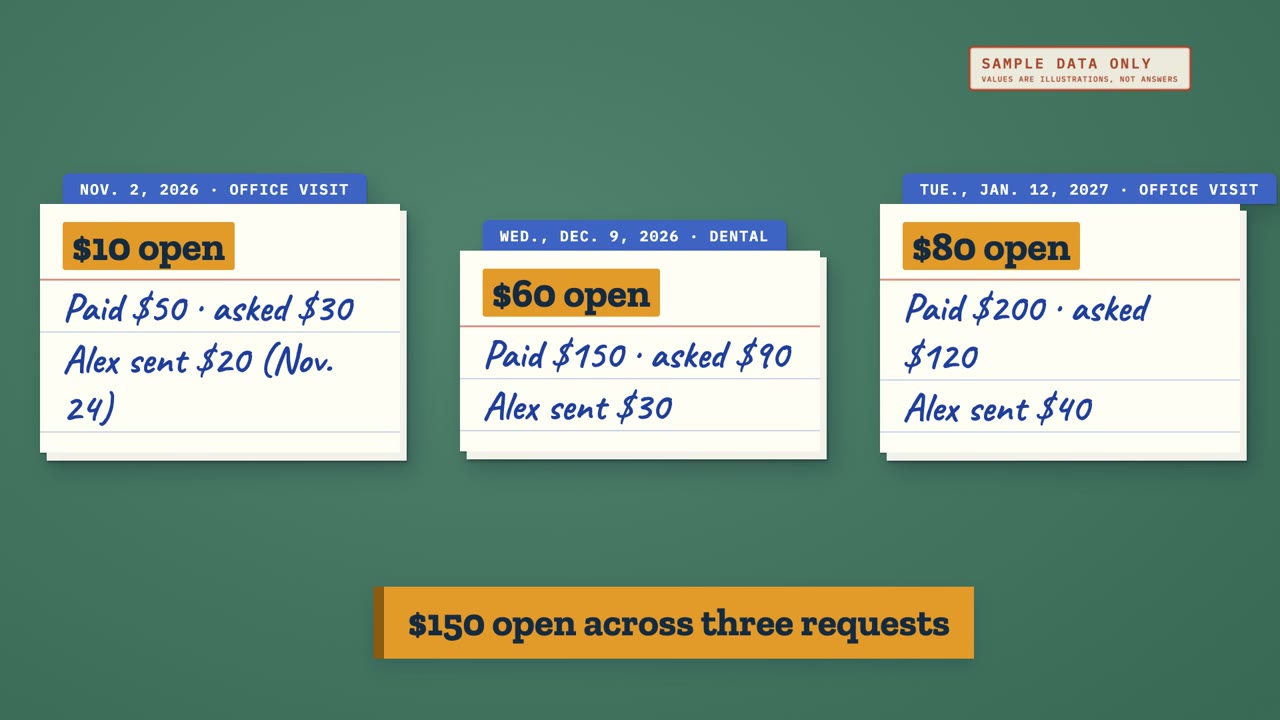
A few months later, suppose Jordan decides it’s time to talk with an attorney. By then, Jordan has entered each expense as it came up. The November office visit still has ten dollars open. The next entry is a dental bill with sixty dollars open. The third is another office visit with eighty dollars open. That’s a hundred and fifty dollars across three requests.
Jordan brings the order, the three dated entries, and the records that go with each one. When the attorney asks, “Did Alex pay anything toward the November visit?” Jordan can turn to that entry, show the twenty-dollar transfer, and pull up the message asking about the remaining ten. Jordan can use that meeting to ask about the options instead of spending an attorney’s billable time trying to remember the details of the missing payments.
Back at the kitchen table
On November 20, the thirty dollars is still open. Jordan puts the follow-up with the original request and closes the app. If there’s a reply tomorrow, Jordan can pick up the conversation right there.